

I arrived before check-in.
At a quarter past one on 24 October, the lights in a Taiyuan meeting room were already on. The tables were covered in dark green cloth, the chairs in white slipcovers, and two QR codes hung side by side on the projector screen next to a round cartoon figure. The room was not full yet. Staff were setting up laptops; every so often someone put their head around the door and asked, “Is this TRAE Friends?”
It was 1024, Programmer’s Day.
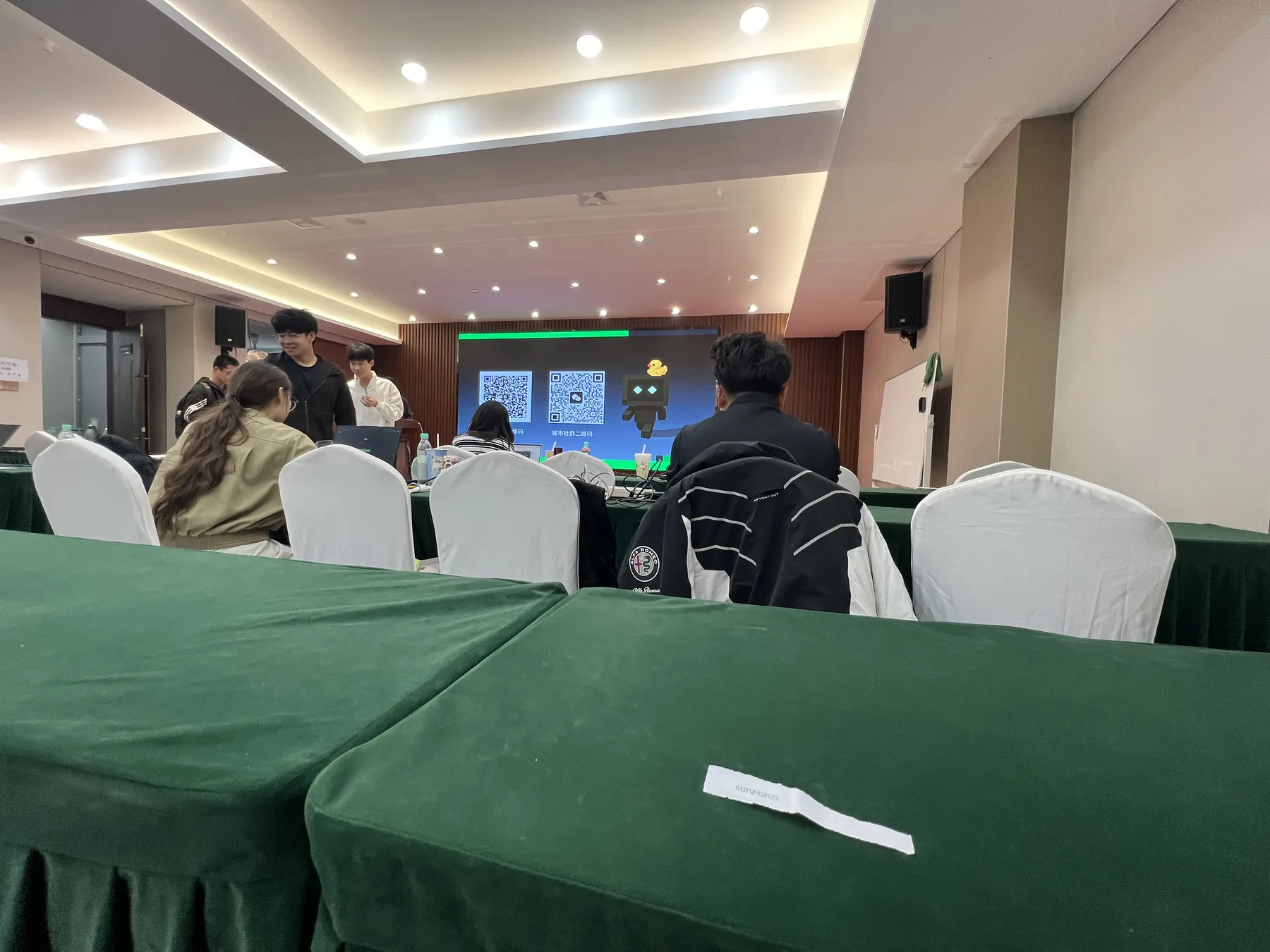
After half past one, people began to arrive. They signed in, found seats, opened laptops. At check-in, each of us was handed a small slip of paper with a TRAE points code. Back at the table I entered it, confirmed the redemption, and watched 520 points land in the account. Only later did I understand that the points were not just a welcome gift but the ticket to the blind box: two draws, three words each, then one set to keep.
This was the code on that slip.

Most people’s first move after sitting down was to take out a laptop. The green tablecloths filled quickly: a Legion, a MacBook, bottles of water, milk tea, folded name cards. On the big screen, an IDE interface rotated in a loop, a hand-shaped cursor resting on the word “IDE,” as if waiting for someone to click.
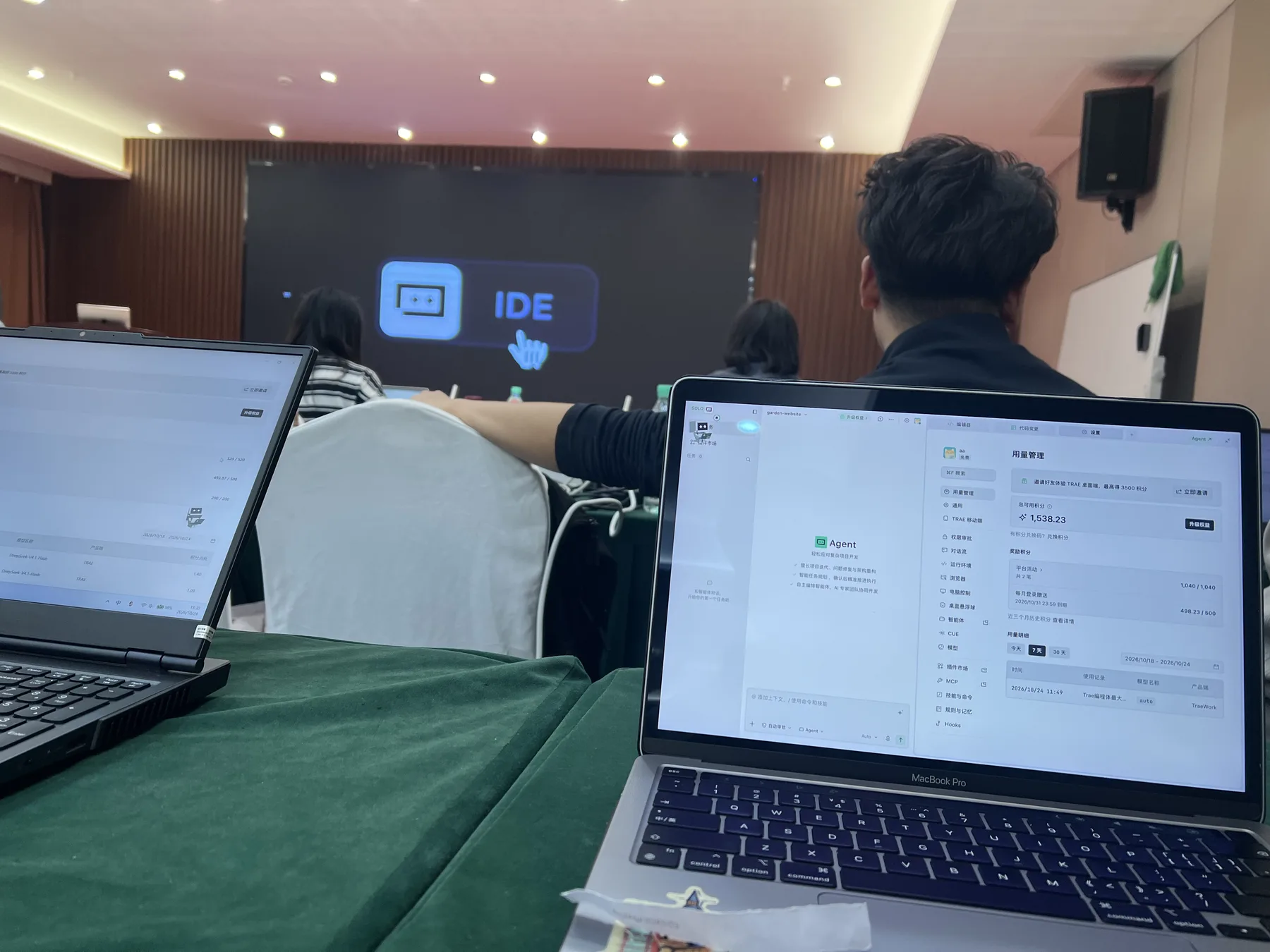
I sat near the back. Looking at all those lit screens, I had the feeling that this was not quite the usual kind of “sharing session.” People had not come empty-handed to hear conclusions. Everyone had a machine in front of them, ready to start.
First, Become a Beginner Again
The event began with an introduction to the TRAE community. According to the event description, TRAE Friends is a city community started by TRAE Fellows for local developers and AI enthusiasts. The photographs on the screen came from earlier meets — different cities, different faces, each standing in front of their own projector. The slide listed workshops, demo days and hackathons.
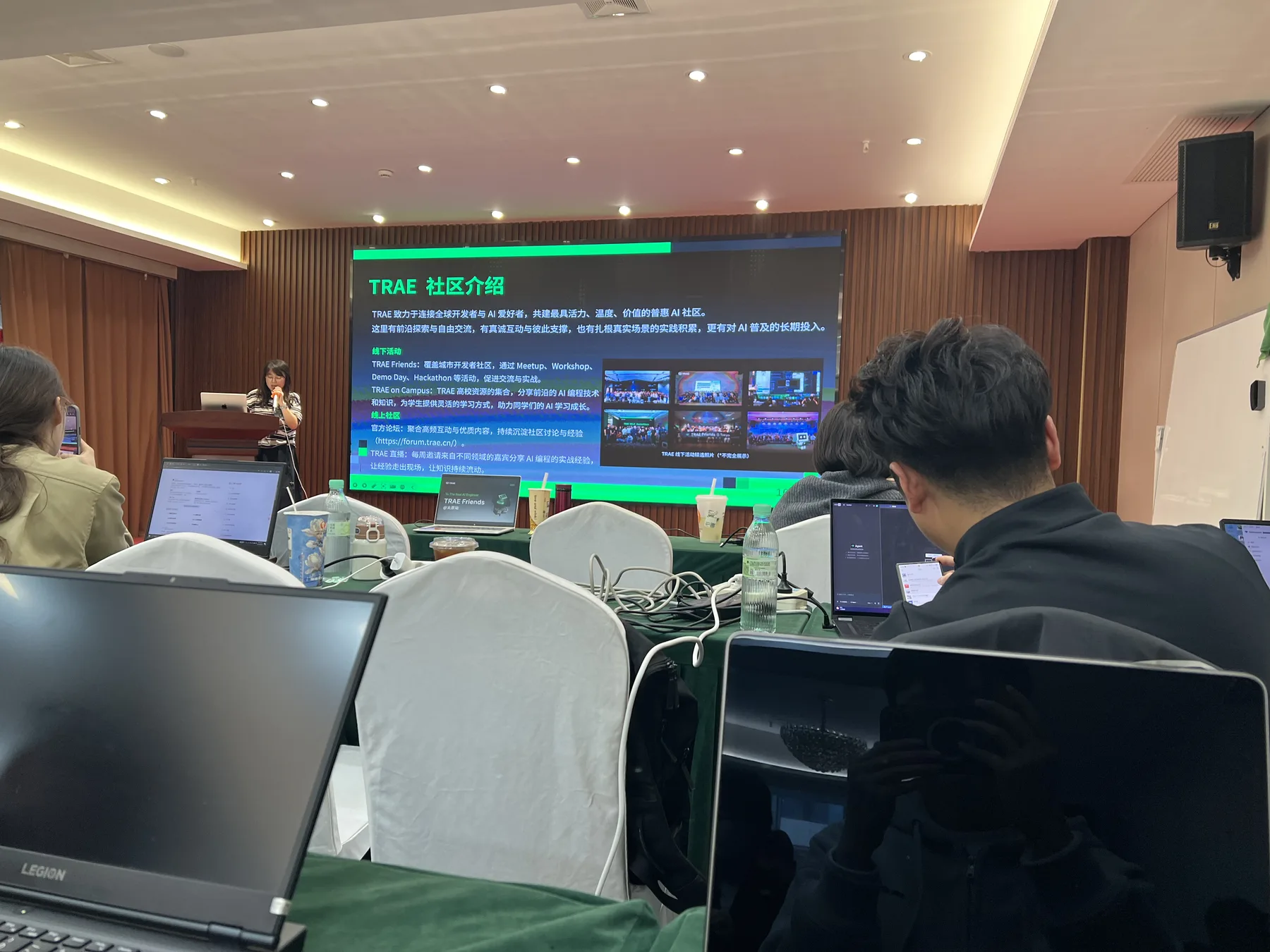
That day, dozens of cities across China were holding the same 1024 event. Taiyuan was just one room among them.
But “community” is a large word on a screen. In this room it became small: a table, a power strip, a half-finished milk tea, the question of whether the person next to you would turn their laptop around and show you what they had just made.
It had been a long time since I had been a beginner in a room like that. In my own work I know what I can do and which mistakes I no longer need to make. But when the prompt is drawn at random, you are back to the original state: you do not know what to build, or whether you can finish it.
The Prizes Were Not the Point
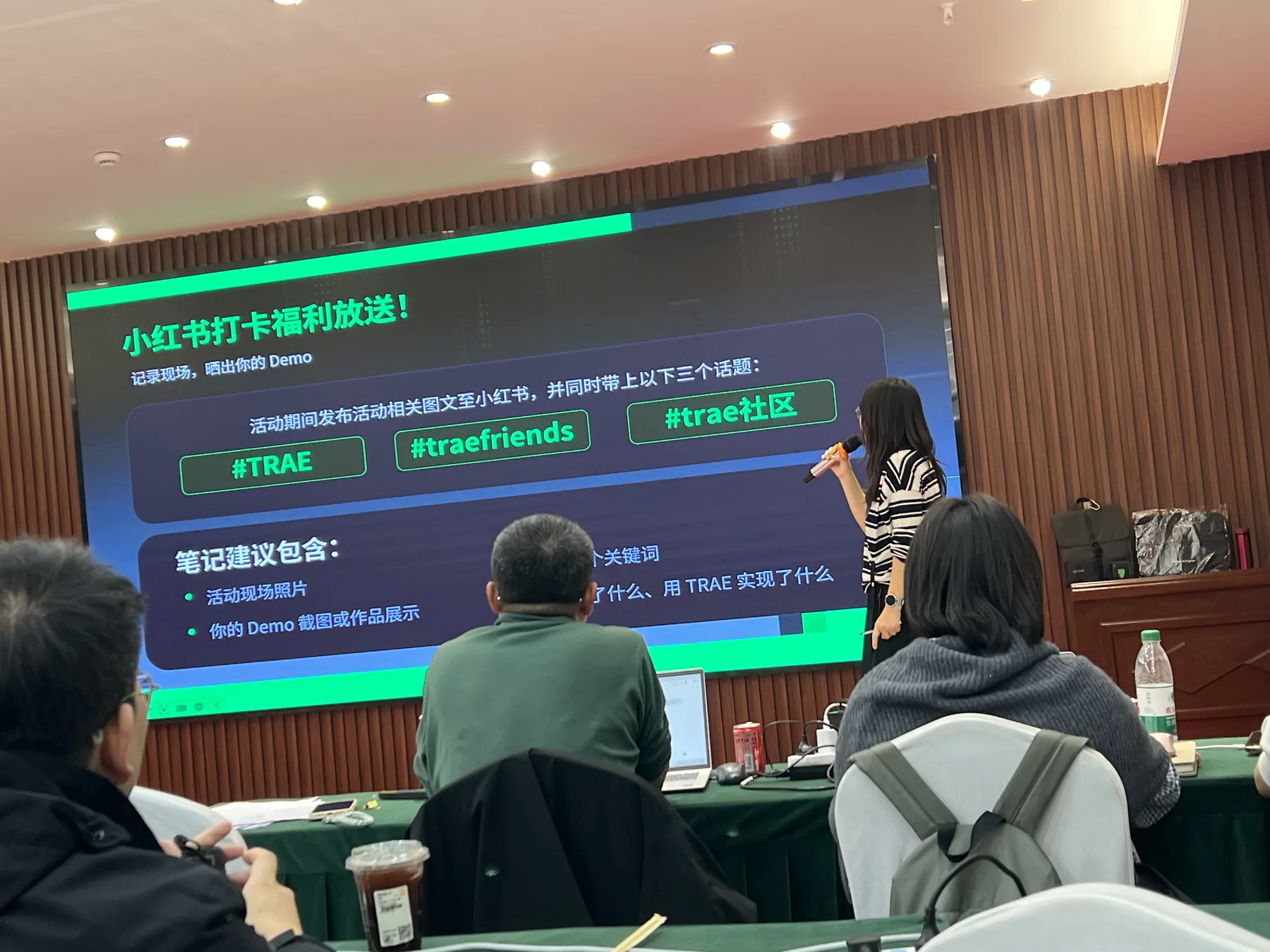
The speaker went through the rewards. Three columns on the screen: participation, quality content, popularity. Participation meant posting about the event with three hashtags; the quality prize would be judged three working days after the event; the popularity prize would pick a top three from those entries. The prizes included TRAE merchandise and a TRAE × Insta360 Mic Air.
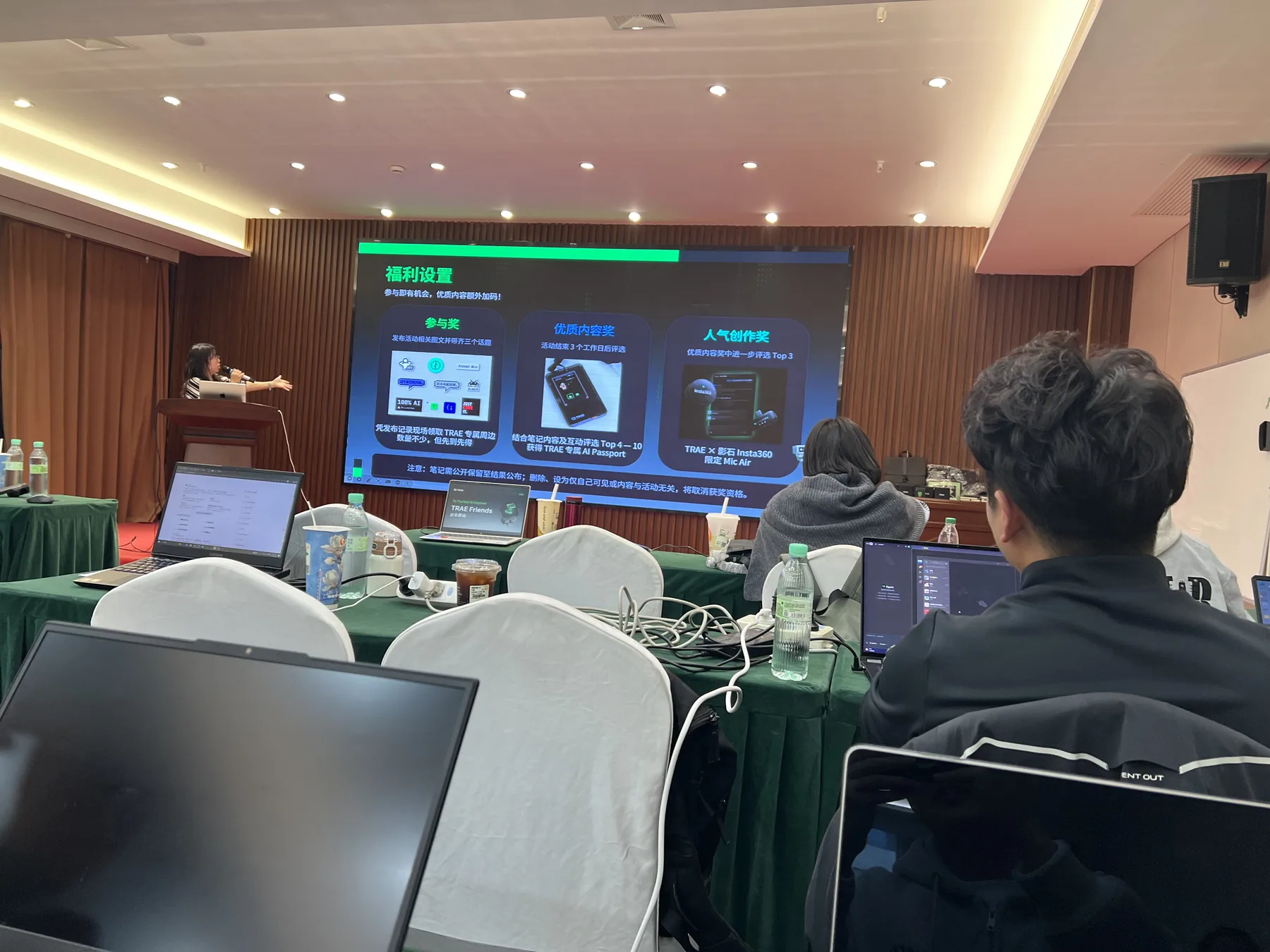
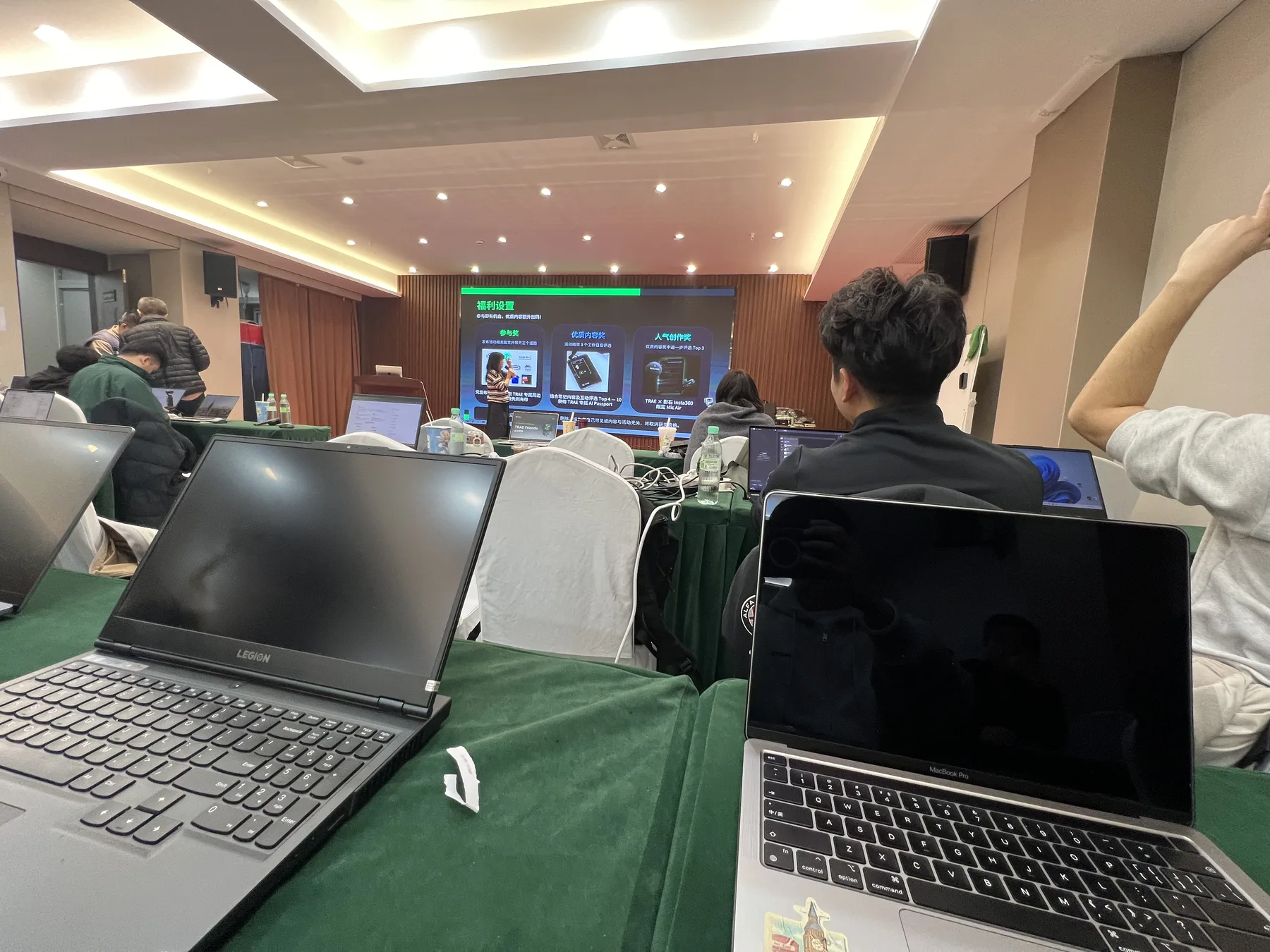
The prizes were not the point, but they gave everyone a light reason to stay after finishing: put the thing on the table and let someone else see it. For people who are used to leaving half-finished work in a local folder, that reason is more useful than being told to believe in yourself.
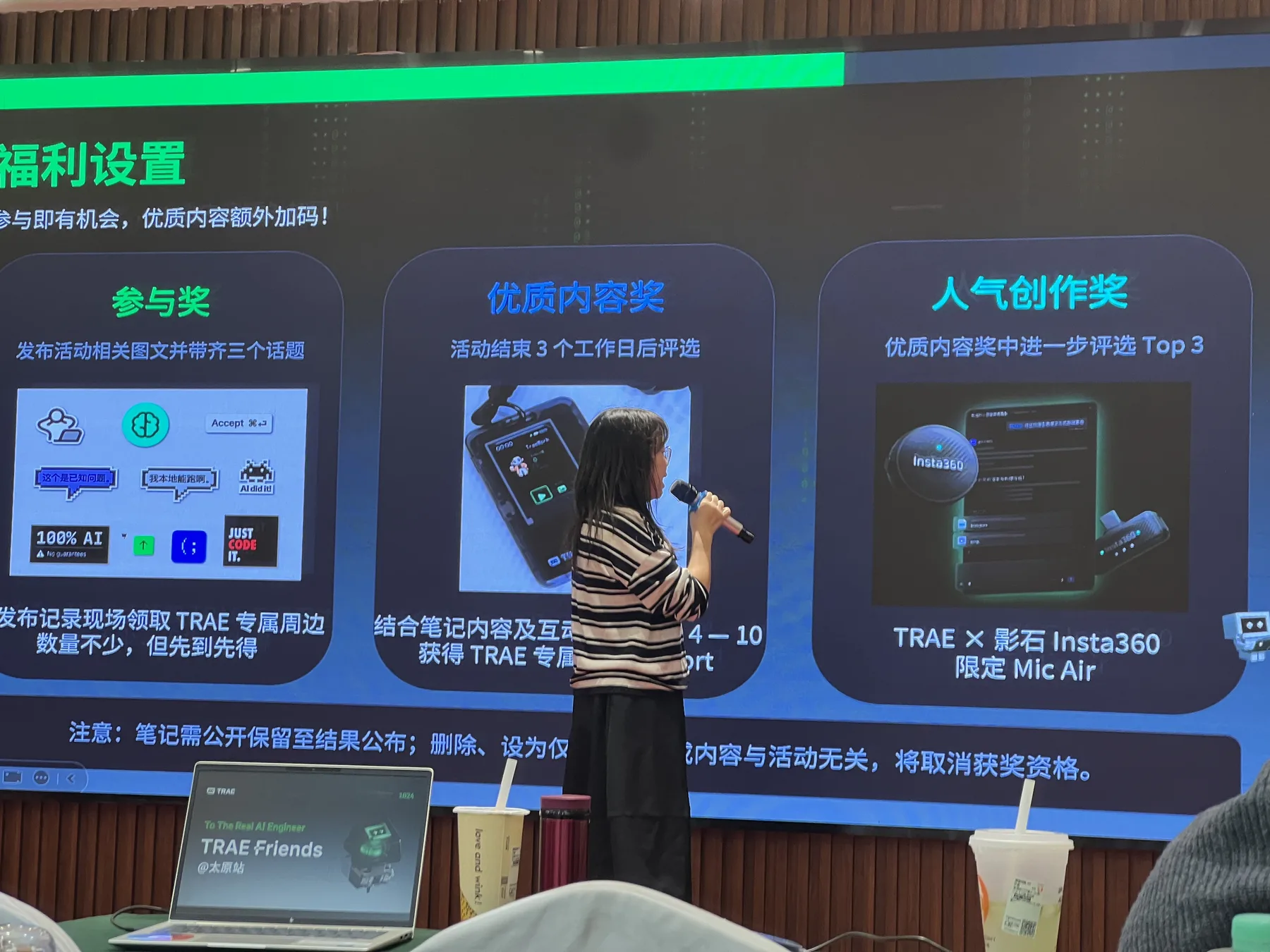
I noticed a small sticker on one of the laptops on the table: “TRAE Friends @太原站.” It did not belong to the stage or the slides. Someone had brought it themselves. For a moment the event stopped being something the organisers had put on and became something the room had made.
After the open mic, at twenty to three, everyone gathered for the group photo. The front row crouched, the back row squeezed in, and the banner was pulled to the front. “TRAE Friends @太原” — black with white letters — was covered in signatures: some large, some small, some squeezed into the margins. In the photo, the front row is still crouching; the back row is already smiling.
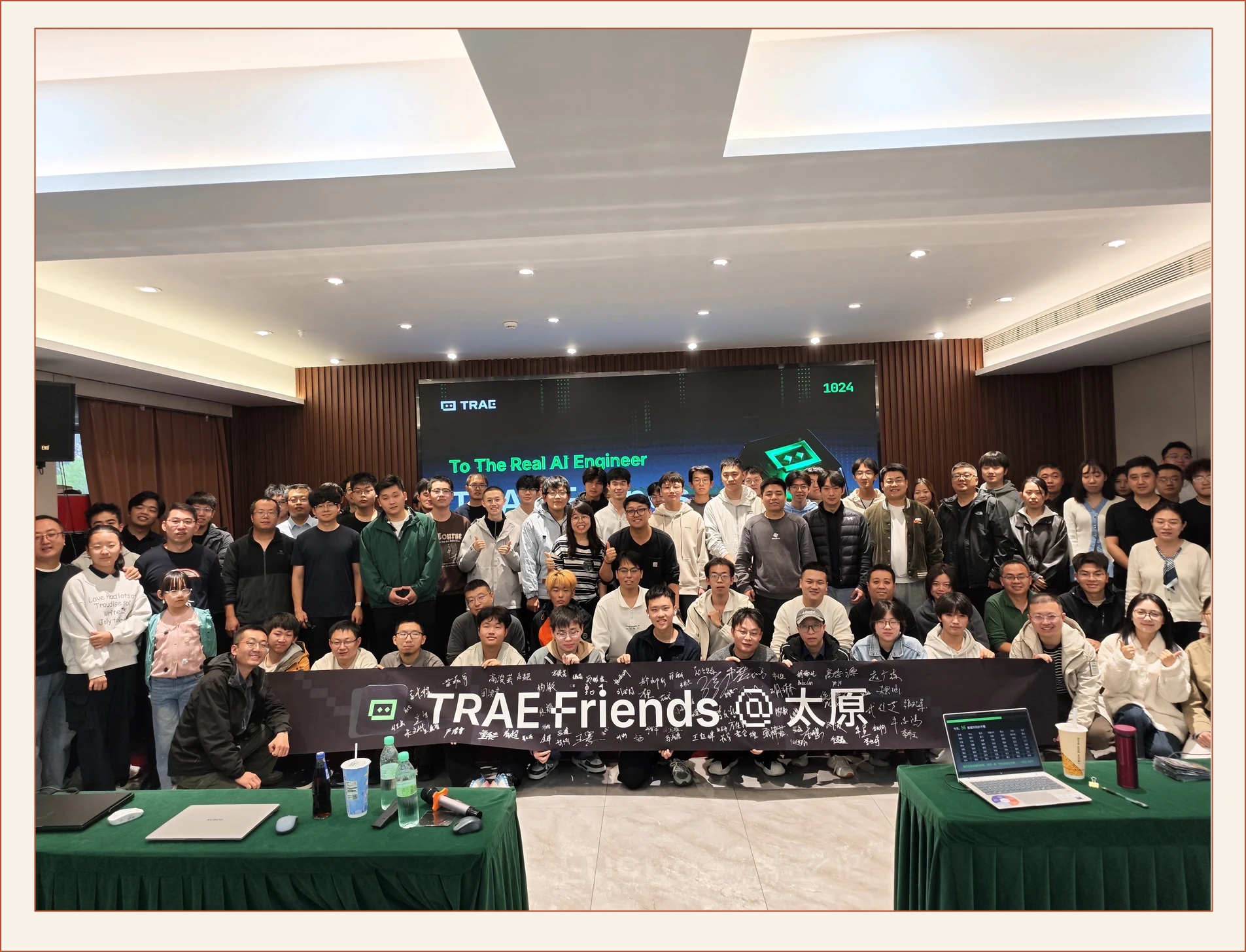
After the photo came the tea break. The milk tea and water bottles on the table were finally remembered.
Three Cards, Ninety Minutes
After the quick Q&A, the blind box opened.
The page showed the first set: theme word 01, “Slack Off”; function word 02, “Customizable”; style word 03, “Nordic Cool.” A line underneath said Group 1 had been generated and one more draw remained. I drew again. The second set was “Late-Night Inspiration / Time Capsule / Bento Card Style.” The two sets sat side by side; only one could be chosen.
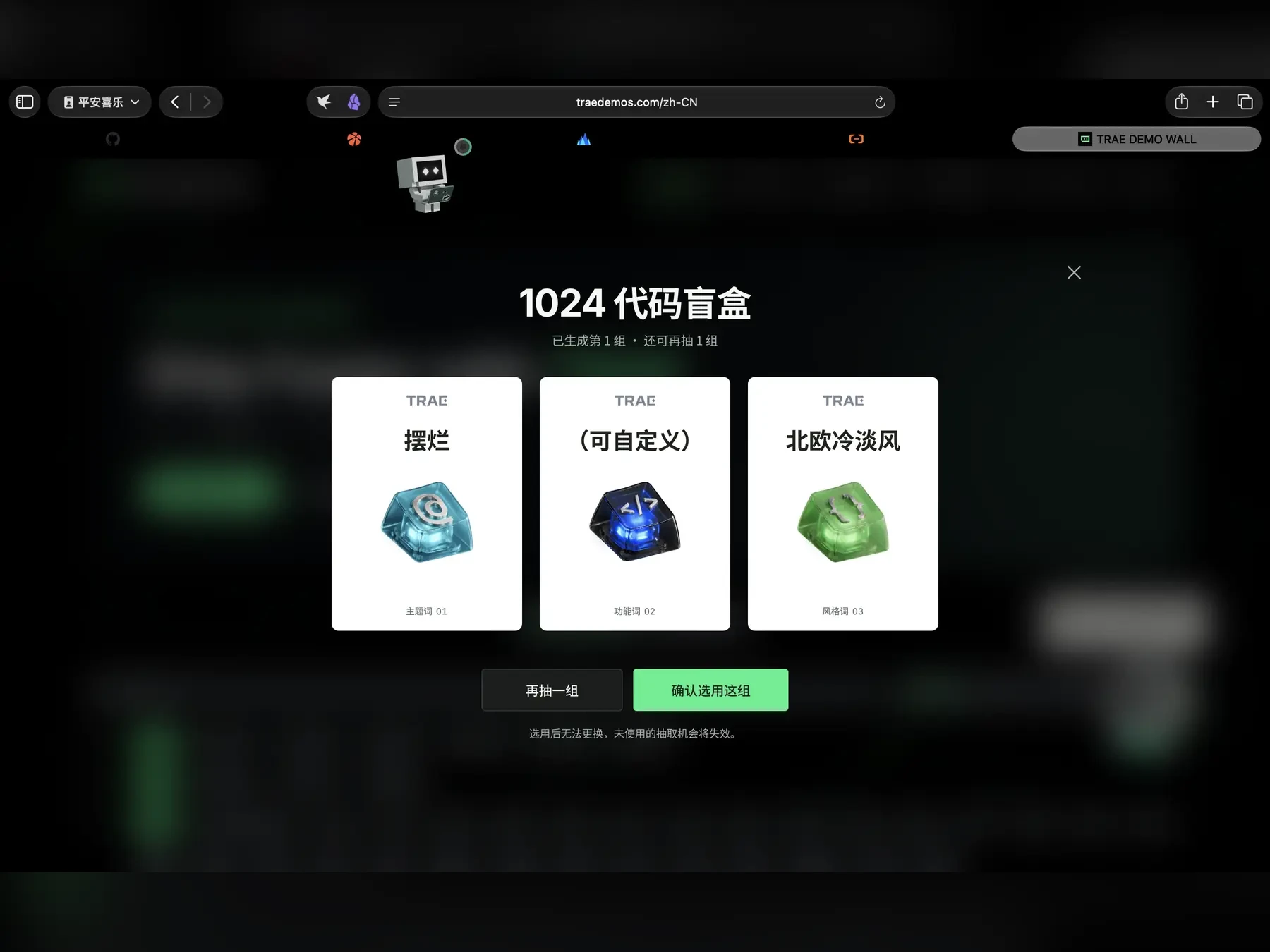
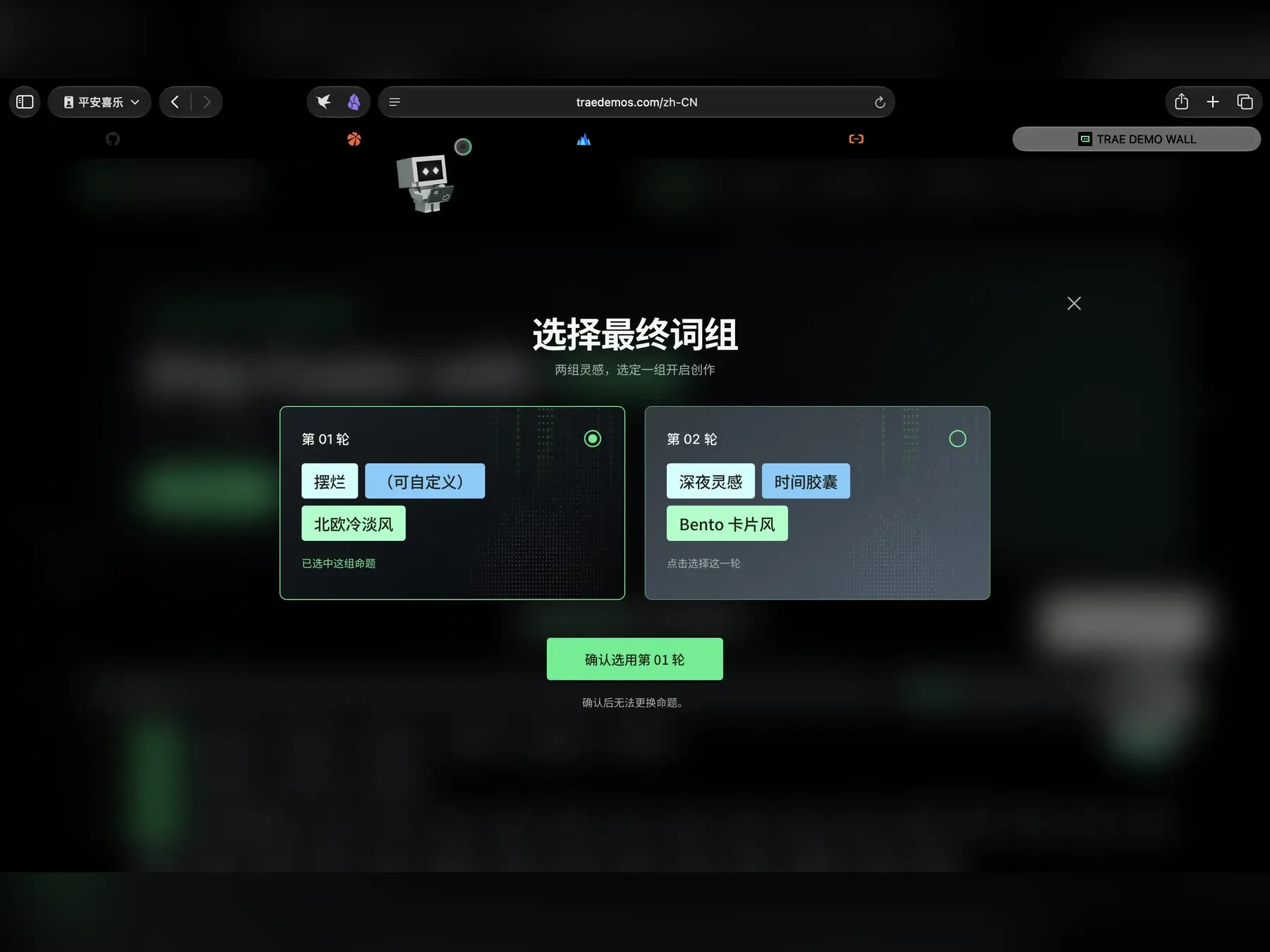
I chose the first set.
“Slack Off” was the theme, a phrase that sounds like giving up. “Customizable” was the function, which left the actual product to me. “Nordic Cool” was the style: cold colours, more white space, fewer words. The three cards did not tell me what to build, but they set the tone, the function and the look. You had to find a path between them and turn it into something clickable in ninety minutes.
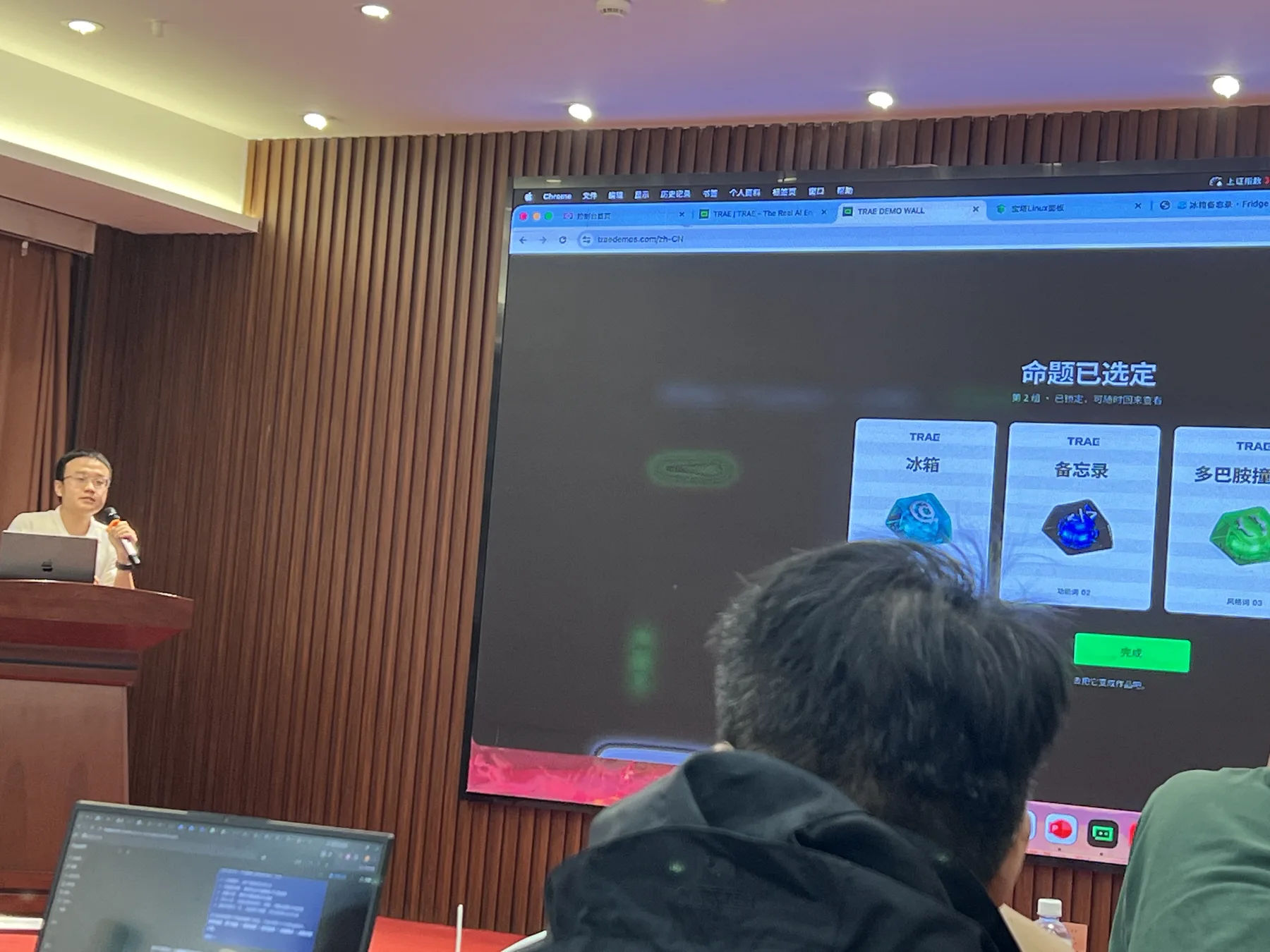
On the big screen, Group 2 had locked in “fridge, memo, dopamine.” Every group had different words, but the rule was the same: three words pin you down, and you find the rest yourself.
I had expected the time limit to make people anxious. Sitting down at the laptop, I found the opposite: the limit made the room quiet. Most projects die at “let me think a little longer.” That afternoon there was no “a little longer.” There was only “build the first version.” Let a page run before deciding whether it should look better; let a button work before deciding whether it is unnecessary. AI can write the first draft, but deciding what to make, what to cut and what to keep is still yours.
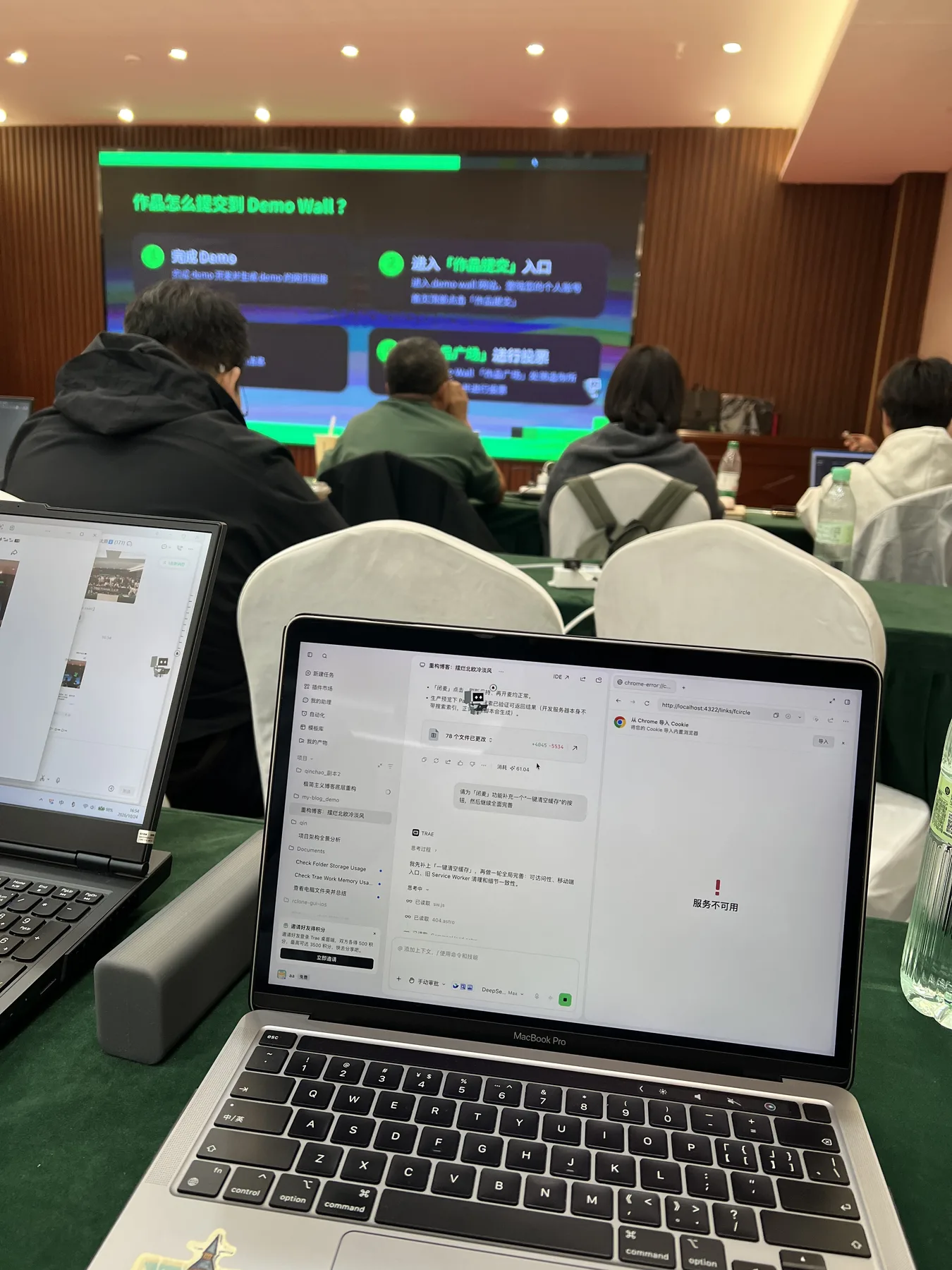
Most of the ninety minutes was not smooth. One browser on the table held a red “Service Unavailable” for a long time. Its owner did not close the laptop; they switched windows and kept going. That felt more honest than any slogan about AI making development easy: tools fail, and people do not stop just because a tool fails.
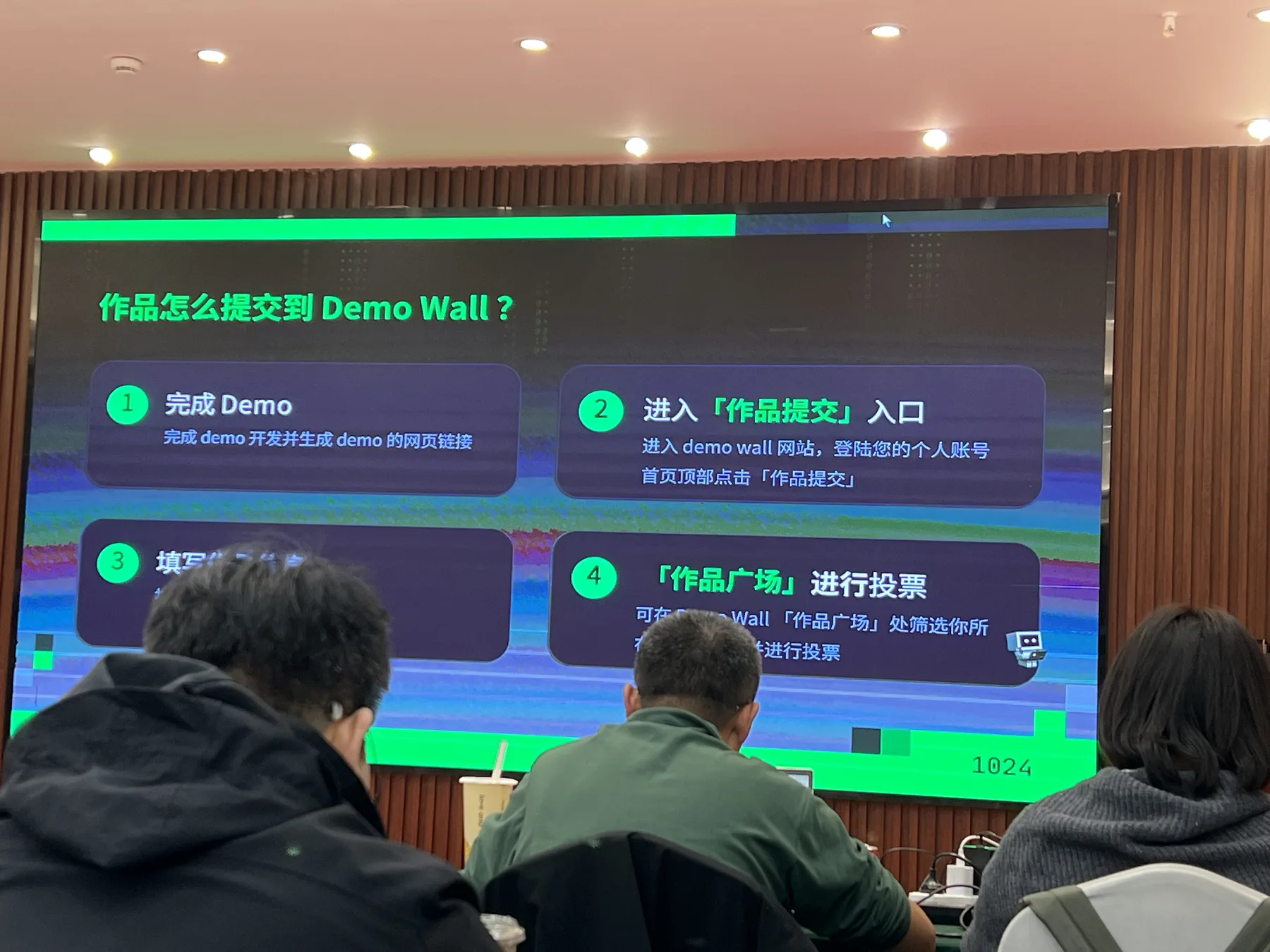
At ten to five, the work had to go onto Demo Wall. The steps were plain: finish the demo and generate a web link; go to the submission page; fill in the project details; vote in the project gallery. “Done” stopped being an abstract word. It had a physical action: paste the link.
Put the Imperfect Thing in Front of People
The showcase and voting were scheduled for the evening.
That was another test. A project no longer faced only its maker; it faced a room full of eyes. Whether it was good or not suddenly became something you had to admit in public.
The organisers had also prepared a Xiaohongshu check-in with three hashtags on the screen. The laptops were still open. Making and recording happened in the same afternoon. You build something, and then you learn to admit that you built it. For many developers, the second part may be harder than the first.
After the Room Emptied
The schedule ended at six.
Walking out, I was still thinking about the three cards. Slack Off, Customizable, Nordic Cool. Three words that did not quite make sense together, and yet they had pushed a room of people from watching other people build to building something themselves.
In Taiyuan, events like this are not common. Whether a city has a developer community may not depend on how many big companies it has. It may depend on whether people are willing to come to a meeting room on a Saturday afternoon with a laptop, spend ninety minutes making something that may not be useful, and then put it in front of someone else.
That day I did not make anything remarkable. But I remembered the light in that room, the keyboard sounds rising and falling across the green tablecloths, the names crowded onto the banner, and the line on the screen: “The prompt has been chosen.” It felt like a quiet reminder: stop waiting. Start with the three cards.
Next 1024, if Taiyuan has a room like that again, I would like to come. Even if the demo is rough again, it does not matter. For those ninety minutes, at least, we were not the audience.
Event details
- Date: 24 October 2026, 13:30–18:00
- City: Taiyuan
- Event: TRAE Friends 1024 Programmer’s Day city meetup · limited-time blind-box challenge
- Format: check in for 520 points; draw two sets of three keyword cards and keep one; build a demo with TRAE in ninety minutes
- Programme: check-in / opening / product sharing / open mic / 1024 group photo / tea break / quick Q&A / card draw and build / showcase and voting / awards
Photographs and screenshots by the author.
If you enjoyed this, leave a comment~