

The venue was called Wuweili.
A place named for non-action was hosting an afternoon about one person running a company. The name felt like a small contradiction. Then I saw the three characters on the white wall outside — 無為里 — and it began to feel more like a reminder: the hard part is not doing everything. It is knowing what not to do.
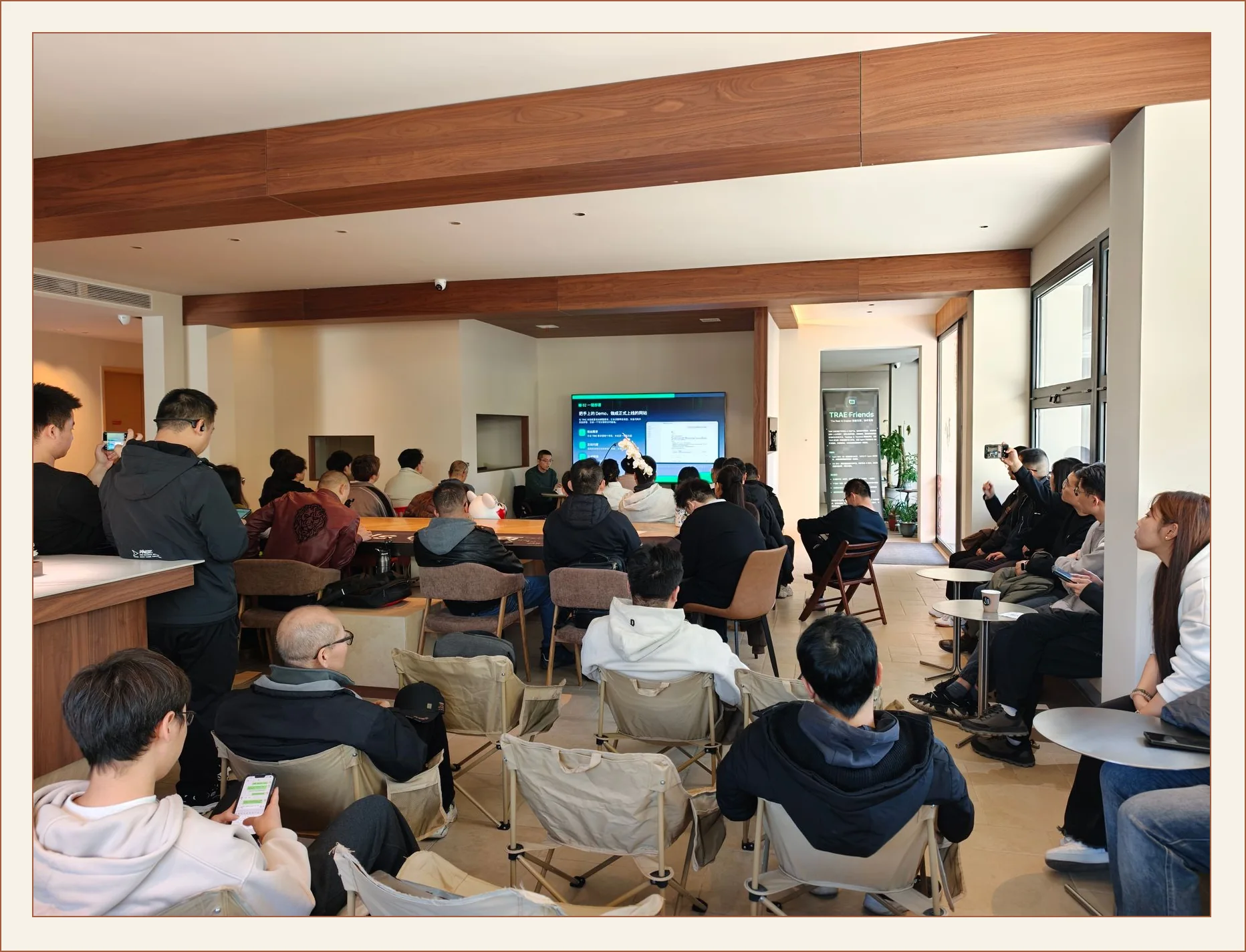
On 21 November, at half past one, Taiyuan was already cold. The address had only arrived by text after the registration was approved: No. 11 Wangcun South Street, Xiaodian District, Wuweili Tea & Coffee. Wind came down the street. Inside, the air smelled of coffee. Glass windows, wooden beams, long tables, camping chairs arranged in a loose half-circle. The screen was already on, showing a pixel mascot. It did not feel like a conference room. It felt like a living room where people were allowed to stay.
At check-in, the staff spread a long black banner across a table. People wrote their names beside the two large characters for Taiyuan, white marker over white marker. The nib made a soft scratch against the cloth. The banner was meant to be a backdrop. By the end of the afternoon it had become a guest book.
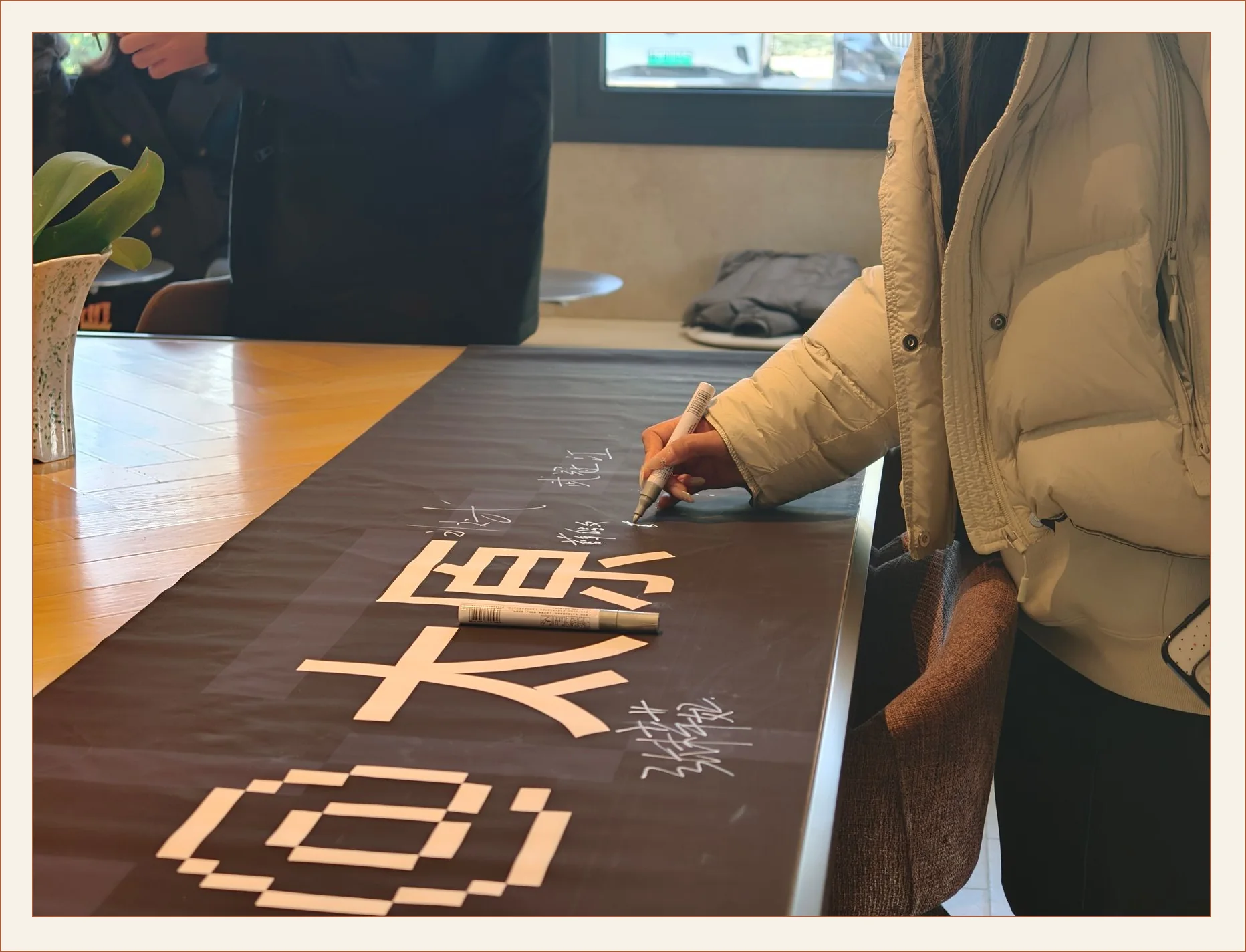
Thirty-eight seconds inside Wuweili.
One Person, One Company
OPC stands for One Person Company.
The acronym sounds hard, like a line on a registration form. In the room, it sounded more like a way of working: one person, plus AI, platforms, contractors, and a few friends willing to help, folding a long product assembly line into something one pair of hands can carry.
TRAE Friends is a city community started by TRAE Fellows for local developers and AI enthusiasts. The November theme was OPC Talk. The description promised real products, real users and real experience: how a product gets made, where the first users come from, which features are actually used, and how to think about pricing, growth and iteration.
There were about forty people in the room. Some had backpacks. Some had laptops open on their knees. Some looked like they had come straight from work. No one handed out business cards. People listened first, then brought their questions to the tea break.
The room did not offer a universal answer. It offered a few specific people, a few specific products, and some experience that did not sound like a success manual.
From a Demo to a Website That Lives
One speaker stood in front of the screen in a green sweater, hands in his pockets. Behind him was an introduction to TRAE.
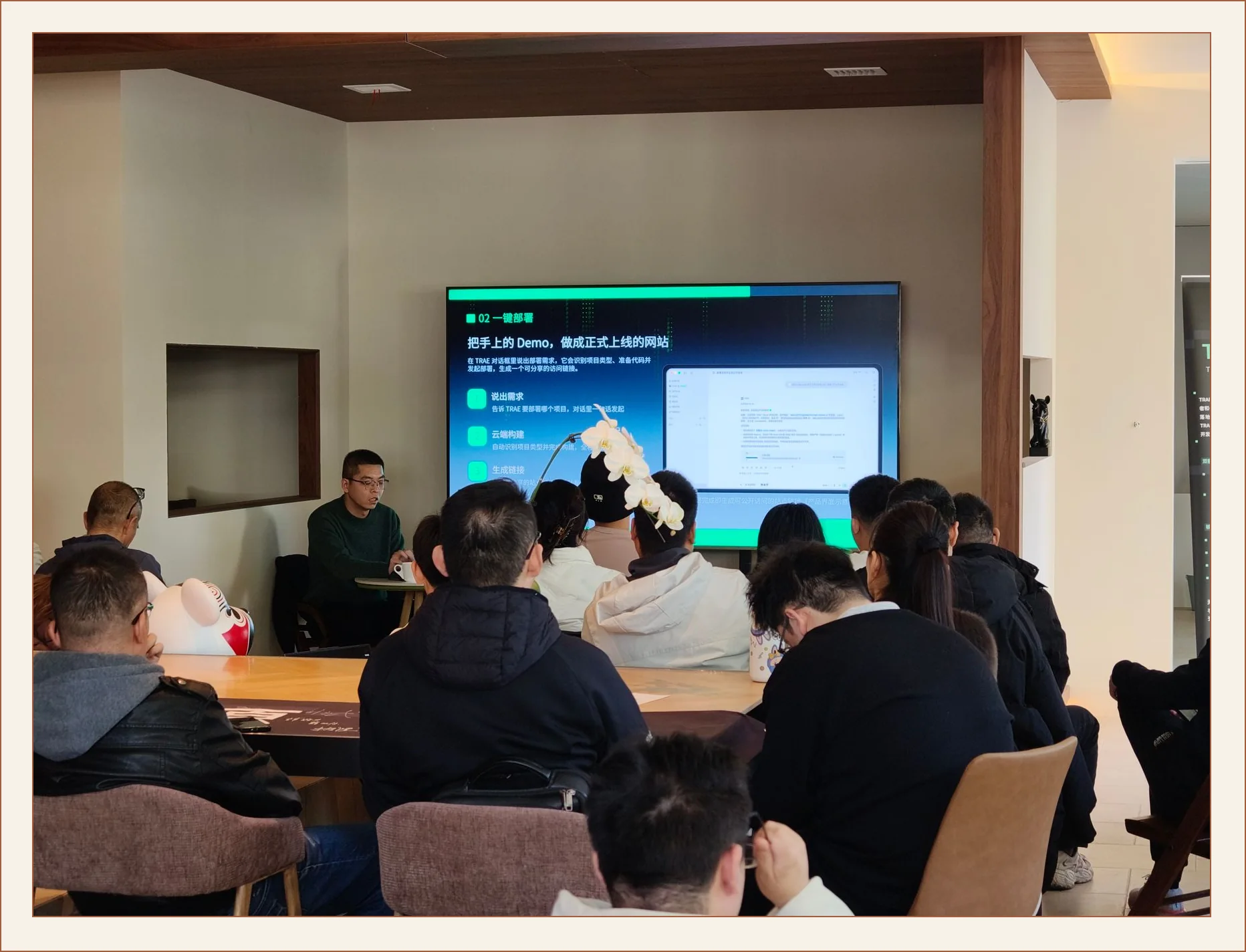
One slide read: turn the demo in your hands into a website that is actually live. Under it were three steps: describe what you need, build in the cloud, go live in one click.
It sounds like an advertisement. In the context of OPC, it is the removal of an old cliff. A few years ago, the distance between an idea and a URL was filled with servers, domains, deployment, certificates and environment variables. None of those steps was hard by itself. Together they were enough to make one person stop.
Now much of that can be compressed into a few conversations. Once the barrier drops, the harder questions show up: What are you making? Who is it for? After it is done, who will use it?
If the talk could be compressed into one sentence, it might be this: AI can pull you out of “I don’t know how.” It cannot decide for you whether the thing is worth doing.
The event also introduced the TRAE Good App Awards and opened a submission channel. For many demos still sitting in a local folder, that was the most practical invitation of the afternoon: do not only build it for yourself.
A City of Cats, Turned into a Star Map
Another product made the room look up.
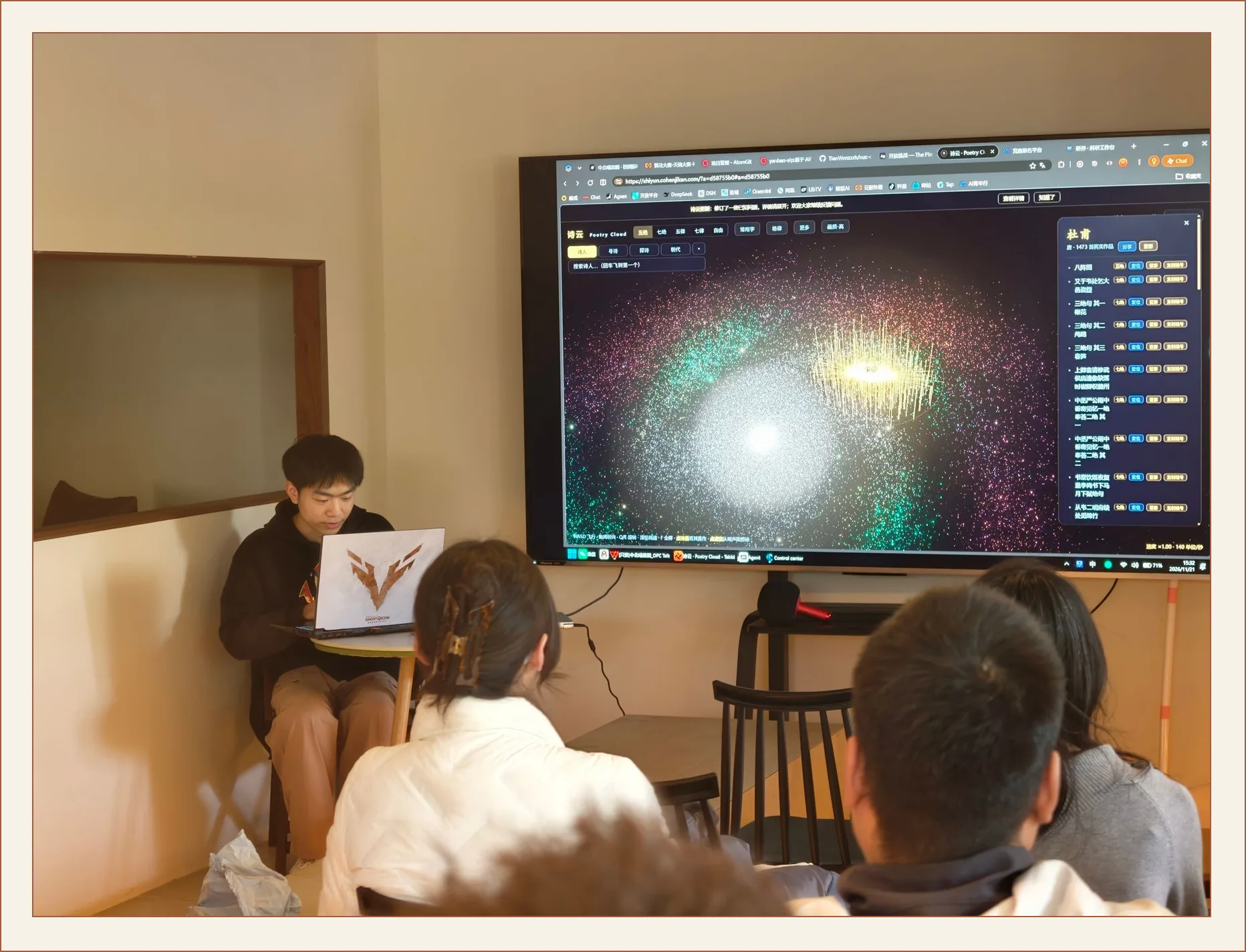
On the screen were 76 cats. They had been turned into 70 stars: fur colour decided the colour, the number of times a cat had been fed decided its magnitude, and each star’s position corresponded to the neighbourhood where the cat actually appeared. A map of Taiyuan’s cats became a galaxy you could rotate and zoom.
The idea did not need much explanation. The moment it appeared, people laughed. Not the “what impressive technology” laugh, but the “I have thought about that too” laugh. One person had taken the cats encountered on a daily route and turned them into a playable star map. The thing carried warmth before it carried features.
I watched the slow rotation for a while. Technology was the rocket that sent the cats into the sky. What held me was the Taiyuan coordinates underneath: the possibility that a few of those 76 cats were ones I had also seen on some street.
Brand Is Not Charging More for the Same Thing
Another speaker stood in a blue hoodie beside a slide about brand.
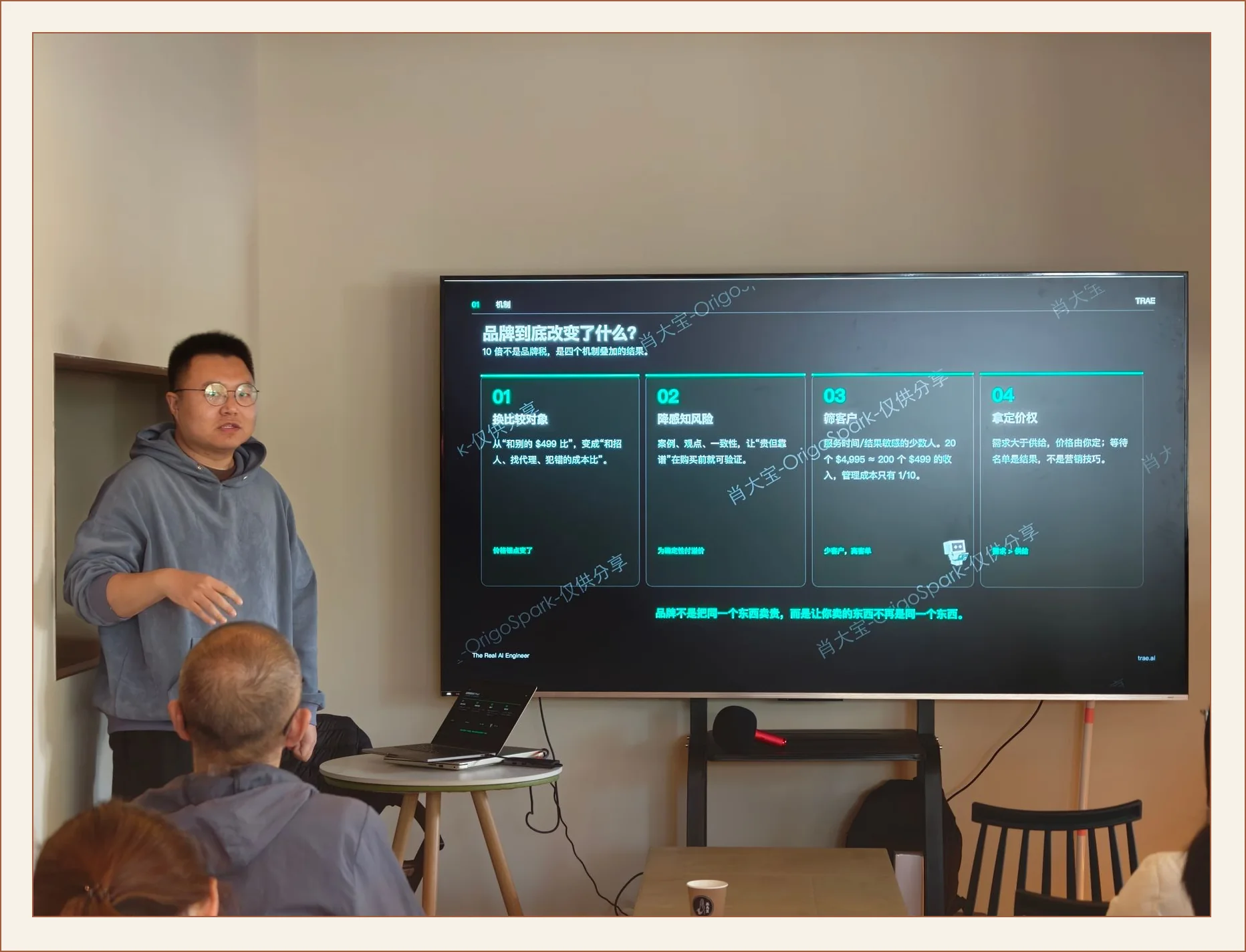
The title asked: what does brand actually change? The line underneath said: a 10x price is not brand premium; it is the result of four mechanisms stacking. The four were: lower acquisition cost, lower perceived risk, lower customer service cost, and pricing power.
At the bottom of the slide was a sentence I kept thinking about: brand is not charging more for the same thing; it is making what the customer buys stop being the same thing.
For a one-person company, that is almost a survival guide. You do not have scale, channels, or a team that can work in shifts. What you have is judgment, taste and trust. Brand may simply be whether someone is willing to listen to you for another five minutes.
Another slide in the room said: three surpluses and three scarcities. Products, content and insight are in surplus; attention, trust and brand are scarce. Once AI makes production cheap, the scarce things become clearer. For a one-person product, the last obstacle is often the question “why should anyone look at it?”
An Audio Tool and an Orchid
At one point, a very young developer sat down at a small round table.
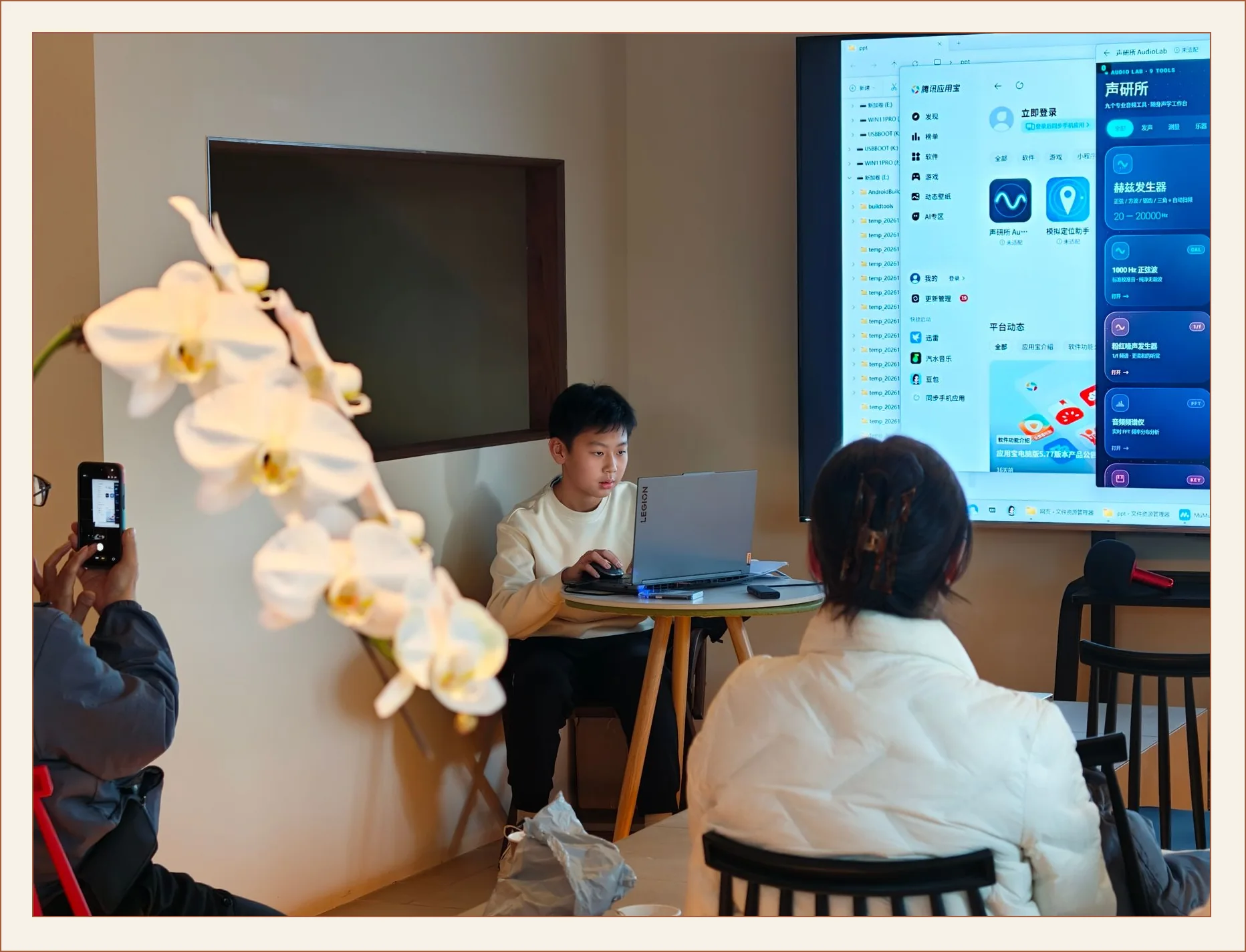
On the screen was AUDIO LAB (声研所). They had compressed a professional audio toolkit into one piece of software: a 20 Hz to 20,000 Hz sweep generator, white noise, binaural beats, all generated locally in real time, without jumping between a dozen web pages.
There were no grand slogans on the screen. There was a row of parameters, and a young person explaining them slowly. In the foreground, a white orchid leaned into the frame. Someone held up a phone to record. Someone else turned a laptop around so the person beside them could see.
The product demo did not need a stage. It needed a table, a laptop, and a person willing to show the thing they had made.
The tool did not try to please everyone. It served one specific use case. For one person, finishing a small thing properly is already hard.
The Real Conversation Starts at Tea
On the schedule, the tea break is one line. At events like this, it is often the main feature.
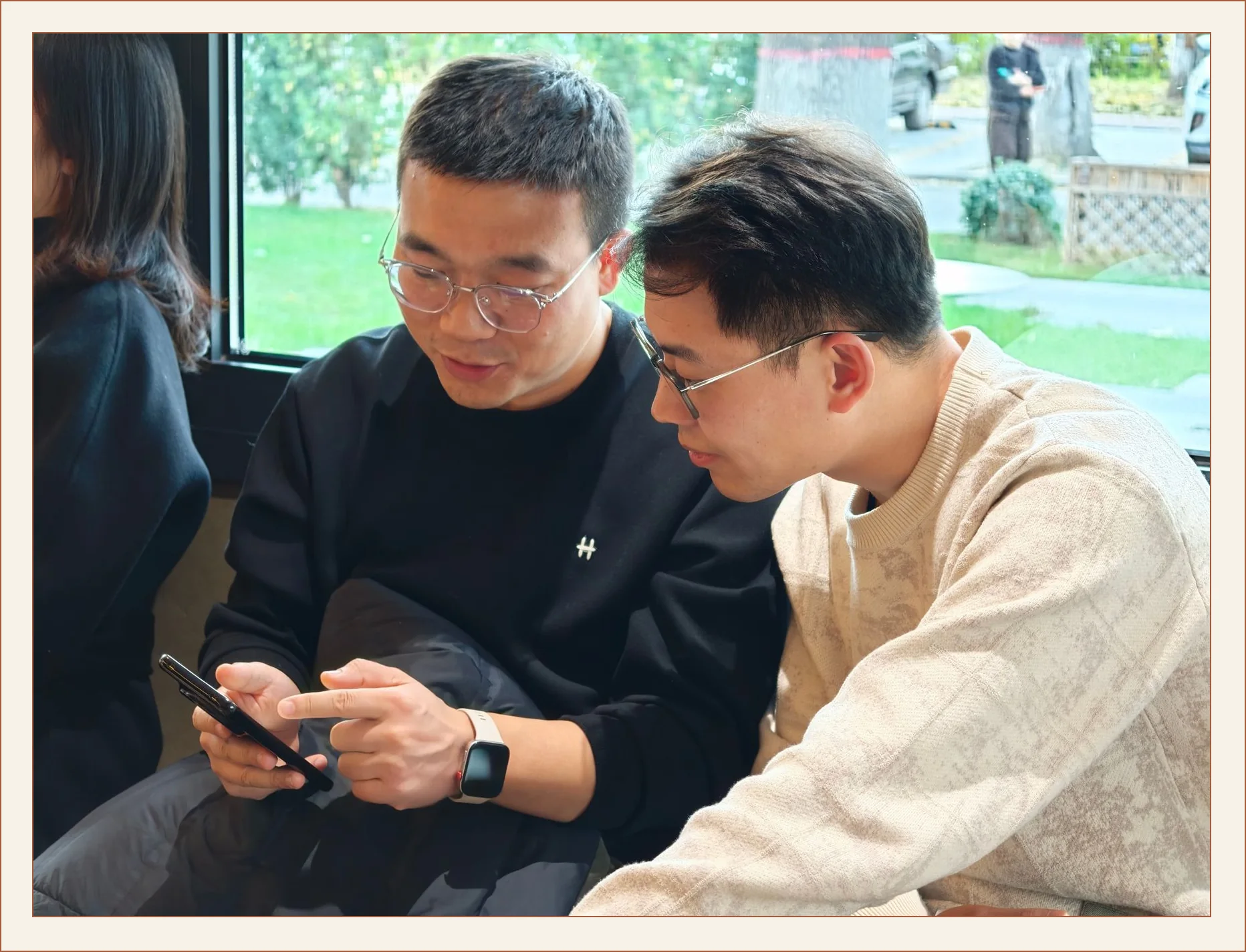
Two people leaned over a phone, one pointing at the screen, the other frowning. Three people by the window held coffee and moved from model pricing to Taiyuan rent. On the long table, boxes of fruit were opened, the dragon fruit and kiwi sitting in the middle, and laptops stayed awake.
The event description said it wanted to talk about real products, real users and real experience. Those questions are hard to finish on stage and easy to open off stage, because there is no slide deck down there — only questions like “is anyone actually using the thing you built?”
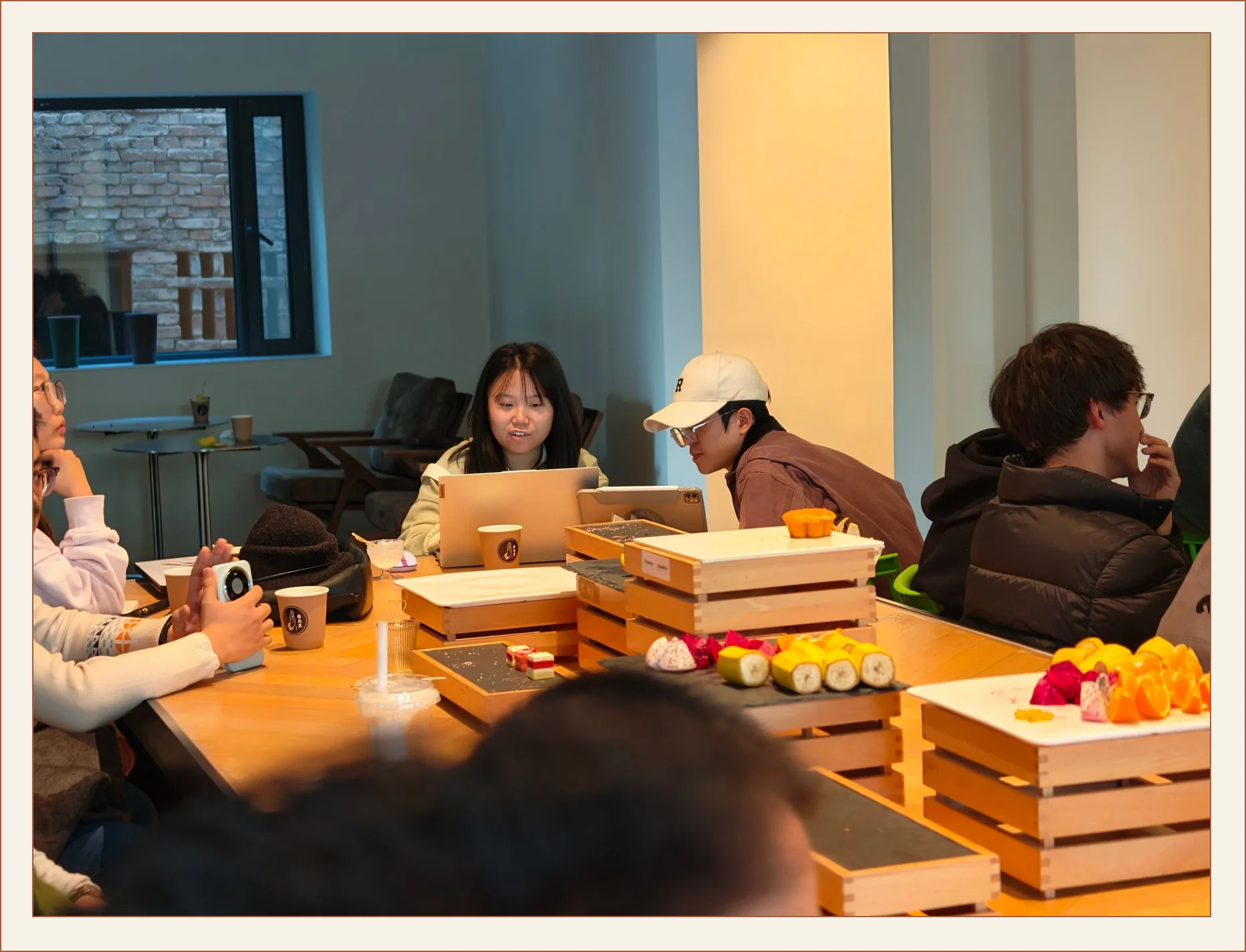
I walked around the room with a cup. Someone was showing a neighbour a project. Someone was scrolling through numbers on a phone. Someone was asking where the thing was deployed. Nobody was in a hurry to exchange business cards. People were exchanging things that had not taken shape yet: an idea, a stuck step, a direction that might be worth trying together.
After the Photo, the Names Stay on the Banner
Before the event ended, everyone went outside to the entrance of Wuweili for a group photo. The front row crouched, the back row squeezed in, and the banner was pulled to the front. The black cloth was already covered with signatures, some large, some small, some pressed into the margins. Just before the shutter, someone called out: look here.
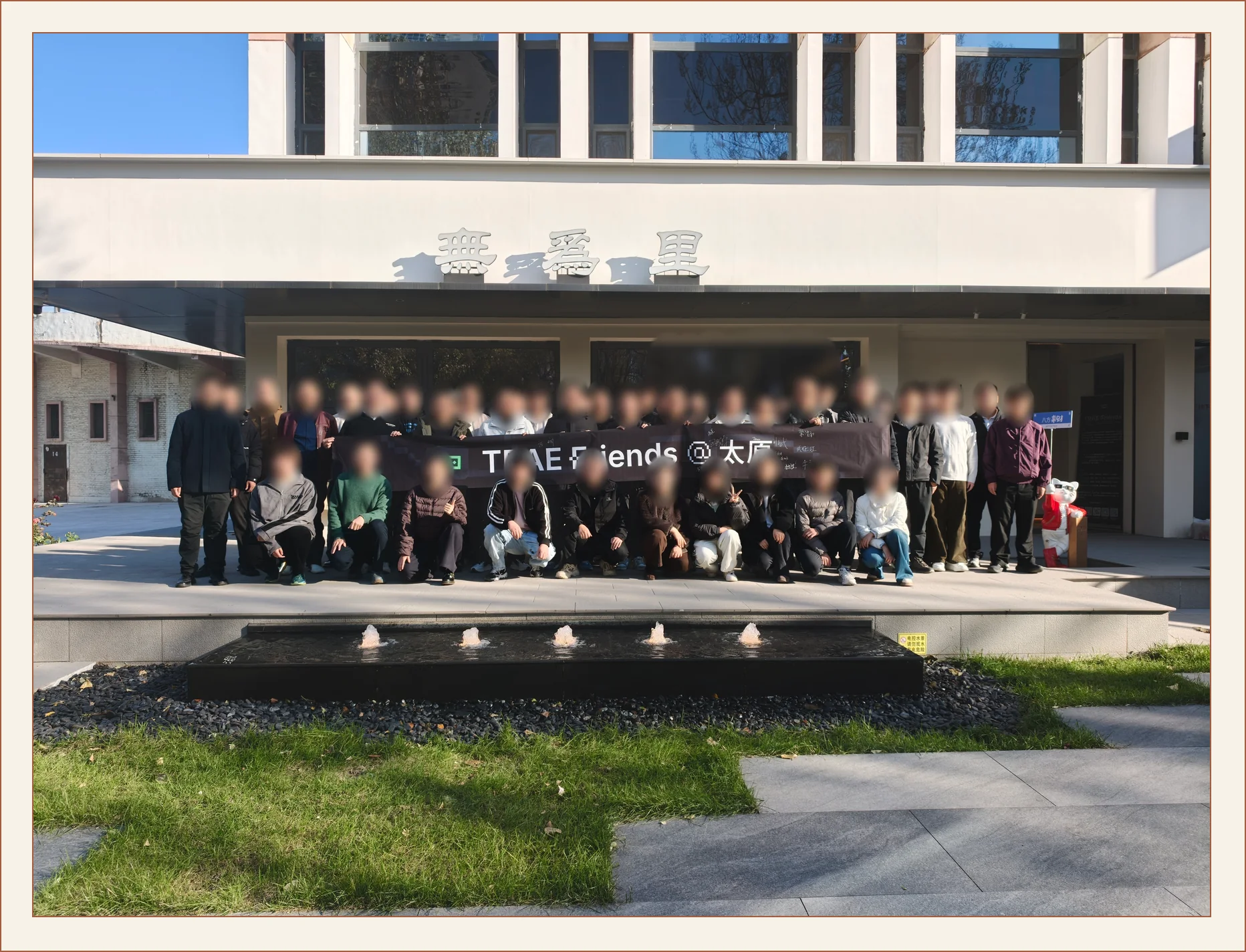
After the shutter, the group dispersed quickly. The afternoon light had begun to thin, and the wind at the door was colder than before. The fountain kept running, and a row of toes remained on the steps, like a sentence that had not been finished.
One Person, Connected
On the way home I kept thinking about the phrase “one-person company.”
It sounds like isolation: one person does everything, one person carries every result. But in that room in Wuweili, it felt more like a different way of being connected: one person, plus AI, platforms, users, and the people in the same city who are willing to go out on a Saturday afternoon.
AI has lowered the cost of making. Community has lowered the cost of asking. What remains is whether you are willing to put an imperfect thing on the table, let someone see it, and make it a little better through their questions.
That may be the plainest meaning of OPC: a company can be small enough for one person to carry, and it does not have to be lonely.
When I walked out of Wuweili, it was already dark. Taiyuan winters are cold, but the warmth left in that room was enough for part of the walk home.
Event details
- Time: 21 November 2026, 13:30–17:00
- Venue: No. 11 Wangcun South Street, Xiaodian District, Taiyuan · Wuweili Tea & Coffee
- Theme: TRAE Friends · OPC Talk
- Programme: opening and introductions / TRAE product introduction / guest talks on AI in practice, product-making and OPC experience / group photo / tea break and open conversation
- Organiser: TRAE Friends
The photographs were taken and edited by the author; all faces in the group photo have been softened for privacy.
If you enjoyed this, leave a comment~